

Why SEAS?
Meet the future
The world needs bold leaders ready to tackle urgent environmental challenges. At SEAS, we say “bring it on.” We’re the architects of a new tomorrow: transforming research into action to create a healthier planet for all.


How candidates are (quietly) talking about climate change – 3 US election strategies you’ll see
SEAS Assistant Professors Geoff Henderson and Nathan Geiger study climate communication and are following how Democratic candidates are discussing climate change in their campaigns. Democratic candidates seem to agree on one strategy: campaign centrally on affordability, emphasizing how people are struggling to afford to fill up their cars, pay their electric bills and insure their homes against natural disasters, they write in The Conversation.
Academic Rigor—Real-World Impact

Research News
The latest in research from SEAS faculty and students

Impact Stories
Master's projects produce real-world throughout the region—and the globe.
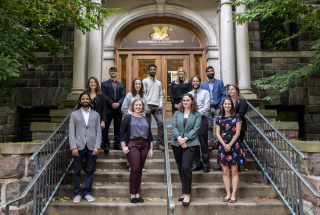
Community Highlights
Our SEAS community is recognized through notable awards and honors across all disciplines.

In the Media
Our experts in the field weigh in on issues across a wide spectrum of media outlets.
Themes
Sustainability Themes cut across all specializations—and give students, faculty, and partners a chance to dig deeper into a particular area of impact and interest. Themes are also used as rallying points for cross-campus research, teaching and civic engagement collaborations.








Bold Leaders: Inventing Tomorrow

Making Ann Arbor’s Bryant Neighborhood a Model for Sustainable Energy
SEAS Assistant Professor Parth Vaishnav and SEAS PhD student Mallika Kothari are studying how residents in Ann Arbor’s Bryant neighborhood cope with power outages of greater than 12 hours. Their work is a small slice of a much larger project to make Bryant the nation’s first carbon-neutral neighborhood.
Read more

Greener by Design: How SEAS Landscape Architects are Making Cities More Sustainable
The work of landscape architects in cities is vital to mitigating environmental challenges like the urban heat island effect, stormwater management and ecological restoration. As cities strive to become climate resilient, SEAS landscape architecture faculty and students are focused on finding sustainable solutions that benefit the public.
Read more

Planning for Climate Migration in the Great Lakes Region
People across the U.S. who live in hurricane-, wildfire- or drought-prone areas may be considering relocating to other places that are perceived as being safer from the effects of climate change. Derek Van Berkel is helping communities plan for climate migration now, so they can be more adaptable and sustainable in the future.
Read more
Upcoming Seas Events
Fall Webinar Series: Introduction to Sustainability and Global Development
12:00 pmThe session will offer an introduction to the Master of Science in...
Seminar with Dr. Genevieve Metson: Urban green infrastructure and sustainability: for who, for what, and how?
12:00 pmJoin the Center for Sustainable Systems for a seminar with Dr...
Fall Webinar Series: Introduction to Sustainable Systems
12:00 pmThe session will offer an introduction to the Master of Science in...
Green Infrastructure for Flood Resilience: An Approach to Increase Institutional Adoption with Community Involvement
2:00 pmPlease join SEAS Guest Lecturer, Dr. Fouad Jaber as he shares his...